
LED poster rental in Las Vegas: what they are and when to use one
Not every event needs a wall. Sometimes it needs two tall screens either side of the booth, a sponsor loop at the top of the escalator, or a moving banner at a trade show aisle. That is what an LED poster is for. Here is what one is, when it beats a wall, and how many a Las Vegas event usually takes.
What an LED poster is
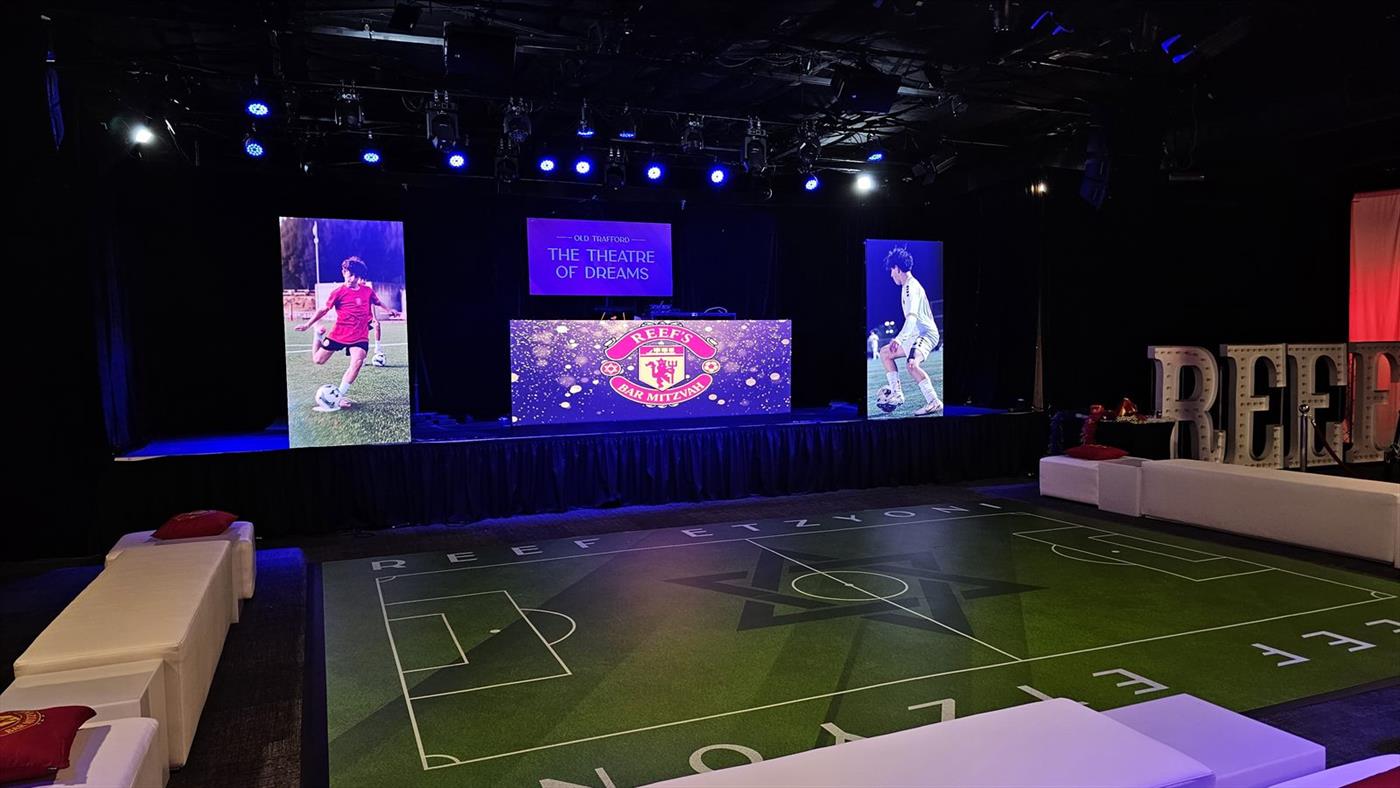
A free-standing, portrait LED screen roughly the size of a door — around 0.6 m wide and 2 m tall — on its own base, with the processing built in. It plugs into a standard outlet, stands anywhere there is level floor, and runs the same content a video wall does: video, photos, a logo loop, a live feed, a monogram. It takes two people a few minutes to place, and it moves if the room changes its mind.
Ours are the same P2.6 indoor pitch as our walls, so a poster beside a wall matches it exactly. Several posters can also be ganged side by side into a wider surface, which is how a 3 m wall is sometimes built when there is no time for ground support.
When a poster beats a wall
A wall is one big picture in one place. Posters are several tall pictures in several places, which is better when:
- The photographs happen in more than one spot. Either side of a DJ booth, flanking a stage, behind the cake table, at the entrance. One poster per photo spot.
- The footprint is narrow. A trade show aisle, a hotel corridor, a registration desk, a lobby pillar. A wall needs a wall; a poster needs 60 cm of floor.
- The content is portrait. A sponsor logo stack, a full-length photo, a vertical video shot on a phone, a menu, an agenda, a welcome message with the guest's name.
- The build window is short. Posters are placed and switched on. No ground support, no 90-minute build, no rigging conversation with the venue.
And a wall still wins when the room has to see one picture from everywhere: a keynote, a montage at a wedding, a live camera during a first dance. Many events use both — a wall behind the stage and posters where the guests walk in.
How many you need
| Use | Posters | Why |
|---|---|---|
| Either side of a DJ booth or stage | 2 | Symmetry in the photographs |
| 10 × 20 ft trade show booth | 2–4 | One per aisle-facing side, plus a product loop inside |
| Lobby, registration or sponsor area | 1 per sightline | Guests should see one from wherever they arrive |
| Mitzvah or quinceañera dance floor | 2–4 | Light behind every photo of the floor and the court |
| Ganged into a small wall | 4–6 | A 2.4 to 3.6 m surface with no ground support |
Content that works on a tall, narrow screen
A poster is roughly 9:32, which is far taller than a phone screen. Content designed for a 16:9 wall will not fit; it needs its own design. The formats that work: a logo centered on a color or a moving background; a vertical stack of sponsor logos; full-length portraits and vertical video; a slow ambient loop in the event colors; a short text message in large type (a welcome, a hashtag, a table number); and the honoree's name or monogram animated. We can take your artwork and build the vertical versions, and we test them on the actual screens before the day.
Where they earn their keep in Las Vegas
- Trade show booths. Exhibition halls are lit hard and bright; a poster at the aisle is visible from thirty feet, where a printed banner is wallpaper. Free-standing, so no hall rigging. We build them into truss booths where the venue prohibits hanging anything.
- Bar and bat mitzvahs, quinceañeras. Two posters either side of the LED DJ booth running the logo, with the wall behind. It is the setup in the photograph at the top of this page. More on those events.
- Hotel lobbies and sponsor areas. A rotating sponsor loop at the top of the escalator, a welcome screen at registration, a schedule outside the ballroom.
- Weddings. A monogram at the entrance, a seating chart that scrolls, portrait photos of the couple flanking the cake. Wedding setups.
- Retail and brand activations on the Strip, where the footprint is small and the foot traffic is not.
Every poster comes with delivery, placement, the content loaded and tested, and collection. Tell us the venue, the date and what the screens have to show, and we will tell you how many and where.